


Birdwatching Hotspots and Tips
February 25, 2026
Boulder Junction’s diversity of habitat attracts a number of rare and endangered birds, making for an excellent birdwatching destination.
Here are some places to visit on your next birdwatching adventure:
Powell Marsh: One of the great wetlands of northern Wisconsin, the Powell Marsh provides birders with a chance to see Yellow Rail, LeConte’s Sparrow, Nelson’s Sharp-tailed Sparrow, Short-eared Owl, Northern Harrier, American Bittern and Merlin. Pets allowed.
Length: 1.5, 2.0, 4.5 and 7 miles loops.
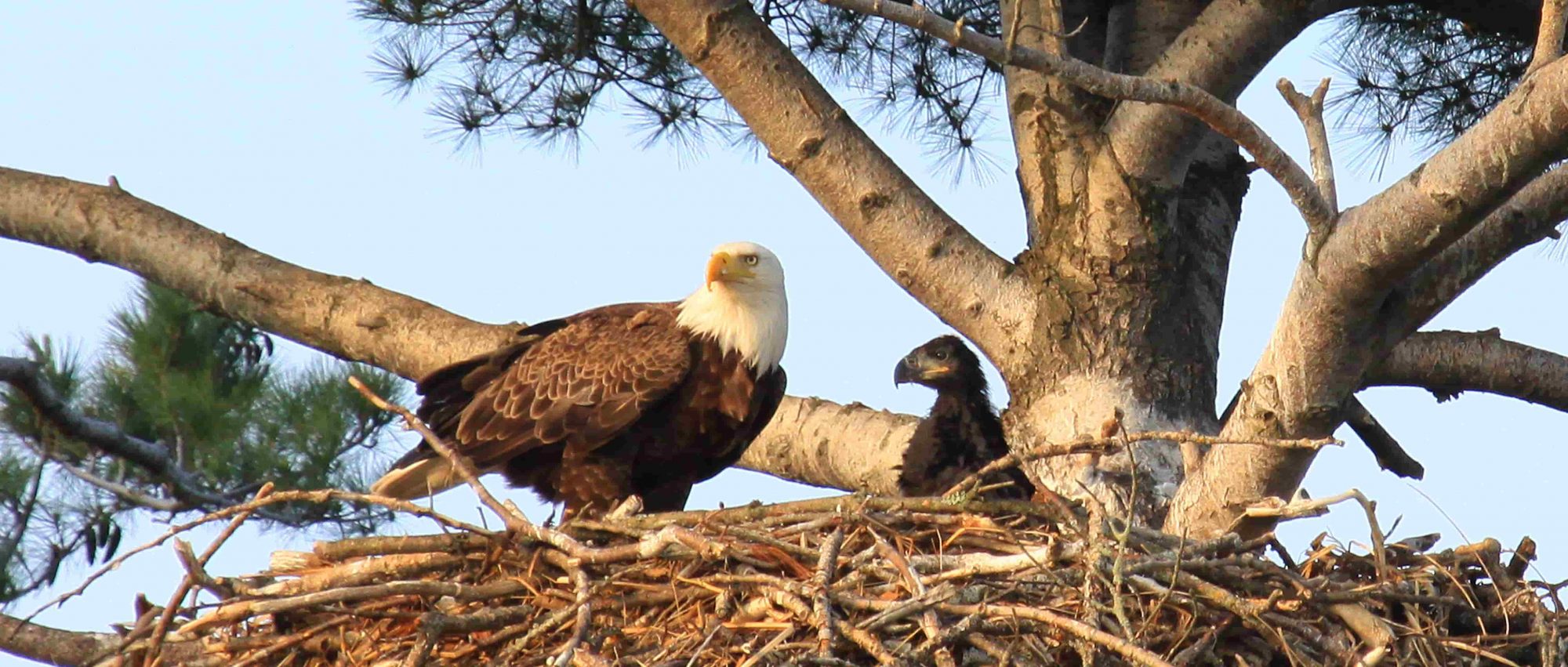
Lumberjack Trail: This excellent trails system provides a dozen miles of birding opportunity. Bald eagle, ruffed grouse and woodcock sightings are fairly common. A wide variety of lowland and upland settings makes this a great place for a walk as well as seeing a variety of wildlife. Pets allowed.
Length: Green Trail– 2.94 miles / Blue Trail- 4.57 miles / Red Trail – 5.86 miles
North Lakeland Discovery Center: Discover fantastic bird-watching at the North Lakeland Discovery Center. In addition to excellent birding opportunities, the 66-acre Discovery Center has 20 miles of hiking trails and a year-round environmental education program. The center is located west of Boulder Junction in nearby Manitowish Waters, which was named ‘Bird City’ in 2010 . Pets are welcome on the trails. Trails are open dawn to dusk.
Length: 1/2 mile to 12 mile loops
Fallison Lake Trail: A true Northwoods gem, the trail features a variety of tree species that surround beautiful Fallison Lake. Many aquatic birds dwell there, including a loons and osprey.
Length: 0.67 mile to just over 2 mile loops
Here are some tips to get the most out of your birding experience:
Pick up a bird identification guide. Start by identifying common Wisconsin birds such as robins, cardinals, blue jays and red-tailed hawks, and eventually you can move on to harder-to-identify birds like sparrows and warblers. It just takes practice!
Watch AND listen. Enhance your birding experience by learning bird songs and using them as a means of identification. The Cornell Lab of Ornithology website is very helpful for beginner birders.
Grab your binoculars. Binoculars open your eyes (literally) to a whole new world of birdwatching. Without them, you’d only see a fraction of the species that are out there.
Explore the waterside. Some of the best birding is found along the area’s wetlands, ponds and lakes, where you’ll find a variety of ducks and wading birds.
Get in the woods. While many wildlife viewing areas can be reached by car, some of the most unique viewing happens deep into the woods. Consider hiking or paddling to improve your chances of seeing rare birds.
Hundreds of thousands of state, federal and county lands surround the Boulder Junction area. Here are some of the best wildlife viewing areas:
Northern Highland-American Legion State Forest protects some of Wisconsin’s rarest types of woodland habitat.
The 25-acre Trout Lake Conifer Swamp, located south of Boulder Junction, is a superb place to find warblers.